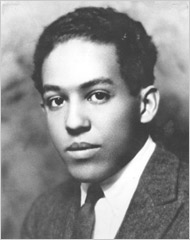
Another easy day since the seniors were out of the building doing their community service project at Britton Elementary School. I have two classes and seniors. Their graduation is this Saturday. They are supposed to be back the following week for three days (Tuesday, Wednesday, Thursday, since Monday is Memorial Day). I really don't expect to see too many of them. What on earth is here for them to come back for?
My juniors are viewing the film The Pursuit of Happyness, staring Will Smith as a man who goes out to get a better life for himself and his family by pursuing a dream of becoming a Wall Street broker. I see it as a continuation of the Everyday Heroes story they read yesterday. My objective is to get them to see that they need to have a goal for themselves and do what they need to do to achieve that goal.
Tomorrow, however, I will be with them on a field trip to Oklahoma Community College for something called "Senior Shift", which I believe tries to prepare them for going into their senior year.
I'll see how well that all works out.
My little take on the world we live in as well as my attempt to "comfort the afflicted and afflict the comfortable."
Tuesday, May 22, 2012
Monday, May 21, 2012
Everyday Heroes
We have been studying the idea of the hero's journey or quest in my junior classes.
Today we read a chapter out of an anthology that I really like entitled Everyday Heroes. These are biographical stories of people who have overcome personal hardships and tragedies to succeed in life. None of the people are famous or celebrities. They are, just as the title says, common people who have made something good out of the kind of problems my students face: drug abuse, homelessness, abusive parents, poverty, and so on.
For the most part my students like reading the stories. They are written on a middle school level and have questions at the end that help them to acquire vocabulary and critical reading skills.
Today, we read about a woman named Catina Washington. Catina's life included being born to a 17 year old mentally handicapped mother who irresponsible living soon had Catina and her family homeless and dependent on charity handouts. Despite this, Catina graduated from high school and college and was voted outstanding woman of the year for Northern California. At the time the book was printed Catina did volunteer work for a homeless hotline in Oakland, California. She planned to go to law school.
What I emphasized in the book is that Catina, like the archetypal hero, learned from her time living on the margins of society and took those lessons with her as she proceeded through life. In fact, she used those lesson to help people in her community much as the archetypal hero brings a boon back to the world she came from.
What I hope to do to enrich the lesson is to get my students to reflect on what they have gained through this year that can help them in the future. Each of them is on an heroic journey.
Today we read a chapter out of an anthology that I really like entitled Everyday Heroes. These are biographical stories of people who have overcome personal hardships and tragedies to succeed in life. None of the people are famous or celebrities. They are, just as the title says, common people who have made something good out of the kind of problems my students face: drug abuse, homelessness, abusive parents, poverty, and so on.
For the most part my students like reading the stories. They are written on a middle school level and have questions at the end that help them to acquire vocabulary and critical reading skills.
Today, we read about a woman named Catina Washington. Catina's life included being born to a 17 year old mentally handicapped mother who irresponsible living soon had Catina and her family homeless and dependent on charity handouts. Despite this, Catina graduated from high school and college and was voted outstanding woman of the year for Northern California. At the time the book was printed Catina did volunteer work for a homeless hotline in Oakland, California. She planned to go to law school.
What I emphasized in the book is that Catina, like the archetypal hero, learned from her time living on the margins of society and took those lessons with her as she proceeded through life. In fact, she used those lesson to help people in her community much as the archetypal hero brings a boon back to the world she came from.
What I hope to do to enrich the lesson is to get my students to reflect on what they have gained through this year that can help them in the future. Each of them is on an heroic journey.
Sunday, May 20, 2012
The Sea of Monsters
The Sea of Monsters by Rick RiordanMy rating: 4 of 5 stars
I enjoyed this book somewhat better than "The Lightning Thief" probably because less background exposition was needed. Also, Percy is a bit more 'grownup' in this book. In "The Lightning Thief", he was very whiny, just this side of annoying. Now, Percy has understood some of the reasons for his troubles and is working to deal with them.
The story is a retelling of "Jason and the Golden Fleece" with a little of "Odysseus" thrown in. Both of these are my favorite Greek legends, especially Jason. So I was glad to see how Rick Riordan worked in both myths into the novel.
Percy also finds family he didn't know he had and learns to accept and love them for who they are.
Great values are being taught in this series by making use of mythology and a bit of history too.
View all my reviews
The Lightning Thief
The Lightning Thief by Rick RiordanMy rating: 4 of 5 stars
I had seen the movie before I read the book. The movie was a disappointment, but I'm glad to report that the book was far better. This is definitely a "Young Adult" book, written at the middle school level, but this old man really enjoyed it. I particularly admire the way Rick Riordan wove in Greek mythology with modern technology. Having Ares as a motorcycle punk was particularly inspired in my humble opinion. I have some students who have read and enjoyed this book. I am thinking of starting a book discussion group around this book and the other books in the series.
View all my reviews
Saturday, May 19, 2012
On Teaching in a Fishbowl
Friday was an interesting day, symbolic, to me, of what is going on in our school.
We have several groups and institutions interested in what's going on at Centennial HS, Oklahoma City, Oklahoma. There are the usual interests: students, parents, building administrators and so on. To these we can add representatives from the Oklahoma State Department of Education, consultants from Pearson, the educational corporation that provides much of our curriculum, even my union, the American Federation of Teachers has teaching "coaches" called PARS, which stands for "Peer Assistance and Review, who are there to help new teachers in our building.
Friday, I had visits from several of these interests, altogether, all in one class period.
They showed up during my 1st period English 11 class. First, I had a woman who has been designated (by whom I'm not certain) as my "teaching coach" from Pearson. She came at the beginning of first hour to observe how the students come into the room, what beginning activities I have assigned them, what the objectives of the day's lesson were, and how I managed the class. Then came Principal Johnson with another Pearson representative. Ms. Johnson was for my formative assessment that the district requires of all teachers. The Pearson rep was there to provide his insights about my teaching. A few minutes after those three had arrived, the PAR teachers came in. I'm really not sure why they were there. I am not in our school's PAR program, so they must have just come in to watch me teach.
The really funny thing about the situation was that the number of observers nearly matched the number of students learning the lesson. We are experiencing a lot of student absences as we wind down to the end of this term. This period, which has always been small, only 14 on the roll, had only 6 students that Friday.
The lesson went well enough. The lesson was to compare how theme of personal responsibility is taught through film, using the movie Cars, and through a fairy tale about two intelligent brothers. I began by having the kids talk about their responsibilities for their families, their education, and their personal lives and used that to examine how responsibility acted as a theme for Cars. Then we read the story about the two brothers and did a Venn Diagram comparing and contrasting the different genres. The students were engaged, most of the time. in the lesson.
Afterwards, I conferred, first with the woman who is to be my teaching coach and then with Principal Johnson and the Pearson consultant (still waiting to hear from the PARs). They all apologized for "ganging up" on me and explained that each did not know that the others were going to there right then. (I'll save a discussion on communication for a later posting.) They all had helpful suggestions to help me as a teacher: things like having clearer goals for my students, finding ways to deepen the lesson, and doing assessments to insure by students really learn the objective.
These are all good things, but I think this incident is a metaphor for what can happen as we travel down the Road of Good Intentions. Conservatives complain constantly about government regulation. Liberals, like me, point out that those regulations exist because something needed correction. Our school has many things in need of correction. I need to improve my teaching. All of the people who came to my class want to help us make those improvements.
But it is easy for these things to get out of hand. I want the help these good people want to provide me, but I can't help but get the feeling that someone is always looking over my shoulder as I teach, that I'm "teaching in a fishbowl" and it is stressful to do so.
A week ago Friday, I "hit the wall" and needed to step out of the fishbowl for a day. (Pardon my mixed metaphor.) This week, I felt better and finished strong; however, I know of several teachers who have hit their walls. We a big problem with teacher absentees. We are all having to cover classes for teachers out of the building for various problems. In addition, we have many "long term" substitutes covering classes for teacher who have just given up. Some of our teachers say they don't plan to be back next year. There are a number of very good teachers who have had real success in the classroom whom we will miss very much if they go.
Perhaps, in our zeal to improve, we are knocking a lot of good people into the wall.
We have several groups and institutions interested in what's going on at Centennial HS, Oklahoma City, Oklahoma. There are the usual interests: students, parents, building administrators and so on. To these we can add representatives from the Oklahoma State Department of Education, consultants from Pearson, the educational corporation that provides much of our curriculum, even my union, the American Federation of Teachers has teaching "coaches" called PARS, which stands for "Peer Assistance and Review, who are there to help new teachers in our building.
Friday, I had visits from several of these interests, altogether, all in one class period.
They showed up during my 1st period English 11 class. First, I had a woman who has been designated (by whom I'm not certain) as my "teaching coach" from Pearson. She came at the beginning of first hour to observe how the students come into the room, what beginning activities I have assigned them, what the objectives of the day's lesson were, and how I managed the class. Then came Principal Johnson with another Pearson representative. Ms. Johnson was for my formative assessment that the district requires of all teachers. The Pearson rep was there to provide his insights about my teaching. A few minutes after those three had arrived, the PAR teachers came in. I'm really not sure why they were there. I am not in our school's PAR program, so they must have just come in to watch me teach.
The really funny thing about the situation was that the number of observers nearly matched the number of students learning the lesson. We are experiencing a lot of student absences as we wind down to the end of this term. This period, which has always been small, only 14 on the roll, had only 6 students that Friday.
The lesson went well enough. The lesson was to compare how theme of personal responsibility is taught through film, using the movie Cars, and through a fairy tale about two intelligent brothers. I began by having the kids talk about their responsibilities for their families, their education, and their personal lives and used that to examine how responsibility acted as a theme for Cars. Then we read the story about the two brothers and did a Venn Diagram comparing and contrasting the different genres. The students were engaged, most of the time. in the lesson.
Afterwards, I conferred, first with the woman who is to be my teaching coach and then with Principal Johnson and the Pearson consultant (still waiting to hear from the PARs). They all apologized for "ganging up" on me and explained that each did not know that the others were going to there right then. (I'll save a discussion on communication for a later posting.) They all had helpful suggestions to help me as a teacher: things like having clearer goals for my students, finding ways to deepen the lesson, and doing assessments to insure by students really learn the objective.
These are all good things, but I think this incident is a metaphor for what can happen as we travel down the Road of Good Intentions. Conservatives complain constantly about government regulation. Liberals, like me, point out that those regulations exist because something needed correction. Our school has many things in need of correction. I need to improve my teaching. All of the people who came to my class want to help us make those improvements.
But it is easy for these things to get out of hand. I want the help these good people want to provide me, but I can't help but get the feeling that someone is always looking over my shoulder as I teach, that I'm "teaching in a fishbowl" and it is stressful to do so.
A week ago Friday, I "hit the wall" and needed to step out of the fishbowl for a day. (Pardon my mixed metaphor.) This week, I felt better and finished strong; however, I know of several teachers who have hit their walls. We a big problem with teacher absentees. We are all having to cover classes for teachers out of the building for various problems. In addition, we have many "long term" substitutes covering classes for teacher who have just given up. Some of our teachers say they don't plan to be back next year. There are a number of very good teachers who have had real success in the classroom whom we will miss very much if they go.
Perhaps, in our zeal to improve, we are knocking a lot of good people into the wall.
Wednesday, May 16, 2012
Easy Teaching Day
Today was about as easy as easy can get. Timeblock 1 & 4 took (yet another) test. This time it was the Gates-MacGinitie Reading Test. The district, I guess, wants to know if the students have made any progress on their reading levels.
Of course, the students pretty much see this as a waste of time, so many don't take it seriously, or don't take it at all. One young man refused to take it and just stood around disrupting other students who were taking it. (We had to do it on-line and were in one of the Career Tech teachers' classroom.) He was escorted to the office. Another student finished the 45 question test in under 3 minutes. (He had 20 minutes to work on it.)
My senior classes, Timeblocks 3 & 6, did Sustained Silent Reading. They actually did keep silent and some read, other pretended to. This is an "easy grade" for them as long as they keep their heads up, their books open, and don't talk. Many are looking for a way to boost their grade at the end of the year, so they take advantage of the opportunity.
My 7th hour was mainly absent. We had an athletics award assembly. I did not get a list of who was supposed to go and who wasn't when they called the athletes down during 6th hour, so by the time 7th hour came, I had maybe 8 students out of a class of 27.
As I said, it was an easy day, but not much education took place.
Of course, the students pretty much see this as a waste of time, so many don't take it seriously, or don't take it at all. One young man refused to take it and just stood around disrupting other students who were taking it. (We had to do it on-line and were in one of the Career Tech teachers' classroom.) He was escorted to the office. Another student finished the 45 question test in under 3 minutes. (He had 20 minutes to work on it.)
My senior classes, Timeblocks 3 & 6, did Sustained Silent Reading. They actually did keep silent and some read, other pretended to. This is an "easy grade" for them as long as they keep their heads up, their books open, and don't talk. Many are looking for a way to boost their grade at the end of the year, so they take advantage of the opportunity.
My 7th hour was mainly absent. We had an athletics award assembly. I did not get a list of who was supposed to go and who wasn't when they called the athletes down during 6th hour, so by the time 7th hour came, I had maybe 8 students out of a class of 27.
As I said, it was an easy day, but not much education took place.
Tuesday, May 15, 2012
This and That on the Way to the Dream
Today was pretty much an average day accept for the student who pulled the false fire alarm.
I did not know who it was until she came into my class and dumped a cup of water over another student. He chased her out before I knew what was happening.
It's never dull at my school.
There are those times when you feel that it would do less damage in the long run just to quit school early and let us all go home to recharge for next year. I attended a seminar when the man giving the seminar proposed a true year round school. Obviously, he has not been in the classroom in a very long time.
One teacher told me that the worst thing about the job is the feeling that no matter what one does it makes no real difference. School is a lot like church. You have to have a lot of faith to make it all work.
My seniors are being sent out into the world. I have faith that all of them will find their own path to success and happiness. What is it the Declaration of Independence says, "...the pursuit of happiness"? I pray that I have given them some of the tools to make it a successful pursuit.
I did not know who it was until she came into my class and dumped a cup of water over another student. He chased her out before I knew what was happening.
It's never dull at my school.
There are those times when you feel that it would do less damage in the long run just to quit school early and let us all go home to recharge for next year. I attended a seminar when the man giving the seminar proposed a true year round school. Obviously, he has not been in the classroom in a very long time.
One teacher told me that the worst thing about the job is the feeling that no matter what one does it makes no real difference. School is a lot like church. You have to have a lot of faith to make it all work.
My seniors are being sent out into the world. I have faith that all of them will find their own path to success and happiness. What is it the Declaration of Independence says, "...the pursuit of happiness"? I pray that I have given them some of the tools to make it a successful pursuit.
Monday, May 14, 2012
Racing Cars and Sleeping Cars
We have two weeks and three days left in the 2011-2012 school term. With all of the tests finished, I can now turn to teaching lessons not on the test.
I am using, presently, two films for my 11th and 12th grade classes. Part of this comes from a need to keep my students engaged in their lessons. They live in a world of visual media: television, movies, videos, on-line material, so I want to make use of visual media in their lessons. I also want them to become active viewers just as I wish them to become active readers. I have chosen two films: the Pixar animated film Cars for the juniors and the film 10,000 Black Men Named George for the seniors.
In Cars, I am emphasizing the way the film tells an old story, the Hero's journey. Just like the ancient bards telling of the "wrath of Achilles", the cartoon tells of a young hero, Lightning McQueen, who gets out of his element when he winds up in Radiator Springs on his way to a big stock car race. While there, McQueen learns the lessons in himself and in his life that he needs to learn before he is able to return to his familiar world.
10,000 Black Men Named George is an historical film about Asa Philip Randolph's successful organization of the porters and maids who worked for Pullman railroad car company. The workers were nearly all African-Americans, as was Randolph, so this was the first largely all black labor union. I am wanting to show my students how African-American history goes far beyond Rosa Parks, Dr. Martin Luther King, Jr., Malcolm X, Jesse Jackson, and Rev. Al Sharpton, as important as those individuals are to the Civil Rights movement. In fact, it was Randolph who, with Bayard Rustin, organized the "March on Washington" where Dr. King delivered his "I Have A Dream" speech.
My objective for the senior is to get them thinking how justice in the work place is a major component in the struggle for civil rights and justice in America. They will soon be a part of this struggle as they take up their careers.
I am using, presently, two films for my 11th and 12th grade classes. Part of this comes from a need to keep my students engaged in their lessons. They live in a world of visual media: television, movies, videos, on-line material, so I want to make use of visual media in their lessons. I also want them to become active viewers just as I wish them to become active readers. I have chosen two films: the Pixar animated film Cars for the juniors and the film 10,000 Black Men Named George for the seniors.
![]() |
| Mater and Lightning McQueen from Cars |
10,000 Black Men Named George is an historical film about Asa Philip Randolph's successful organization of the porters and maids who worked for Pullman railroad car company. The workers were nearly all African-Americans, as was Randolph, so this was the first largely all black labor union. I am wanting to show my students how African-American history goes far beyond Rosa Parks, Dr. Martin Luther King, Jr., Malcolm X, Jesse Jackson, and Rev. Al Sharpton, as important as those individuals are to the Civil Rights movement. In fact, it was Randolph who, with Bayard Rustin, organized the "March on Washington" where Dr. King delivered his "I Have A Dream" speech.
My objective for the senior is to get them thinking how justice in the work place is a major component in the struggle for civil rights and justice in America. They will soon be a part of this struggle as they take up their careers.
Friday, May 11, 2012
I Hit the Wall
At the end of school yesterday, I was emotionally and physically tapped out. I went home depressed, stressed, and exhausted. So I took a Sick Leave day and stayed home.
I don't like doing that. It made me feel as if I was not living up to my responsibilities. But I needed some rest. And I got it.
This has been a long, grinding, difficult school year. We've been in school since August 1st, and I guess I am not used to this pace. I felt that I had hit the wall and could not be in the classroom today.
I slept about 12 hours straight. Got up to eat a bowl of cereal and then slept two hours more. After that I simply sat in my reading chair and read for pleasure for about 4 hours. I went to my Friday afternoon chess club that I run at The Village Library and came home to read some more.
I felt as though I was living selfishly doing just what I wanted to do.
But I am glad I did.
I'll be back on Monday. I think I will be able to finish out the year strong. I love my job, but at times the demands gang up on me. So I needed some time to recoup and recover.
I don't like doing that. It made me feel as if I was not living up to my responsibilities. But I needed some rest. And I got it.
This has been a long, grinding, difficult school year. We've been in school since August 1st, and I guess I am not used to this pace. I felt that I had hit the wall and could not be in the classroom today.
I slept about 12 hours straight. Got up to eat a bowl of cereal and then slept two hours more. After that I simply sat in my reading chair and read for pleasure for about 4 hours. I went to my Friday afternoon chess club that I run at The Village Library and came home to read some more.
I felt as though I was living selfishly doing just what I wanted to do.
But I am glad I did.
I'll be back on Monday. I think I will be able to finish out the year strong. I love my job, but at times the demands gang up on me. So I needed some time to recoup and recover.
Tuesday, May 08, 2012
A Bit Topsy Turvy Today
Kind of a topsy-turvy day. My 7th hour class, which has lately been my best, got out of hand largely due to a couple of students who chose to get into arguments with fellow classmates and play childish games. My 4th hour class, who often have been my problem children, really got into the lesson today.
Both are 11th grade classes, and we read parts from the play Our Town. The 4th hour students really liked reading their parts, more than they liked watching the play. The 7th hour kept interrupting each other with teasing and even paper wads. Had to send one girl to the office and give another boy a detention.
The seniors really like Frankenstein. One boy asked to take the movie home so he could watch parts that he missed due to absences. (See yesterday's posting on that problem.)
We took our textbooks back to the library. Another sign that school is winding down for this term.
We had our Professional Learning Community (PLC) meeting today made up of teachers from various subjects with common "planning periods". We noticed that some members who have been with us at the beginning of the semester are no longer in the school. At the beginning of the year, we had 11 teachers in our PLC. Four of our group are no longer in the school: one due to a long term illness, two for personal reasons, one for unknown reasons. Rumors are that several teachers in our school will/may not be back next year.
It has been a bumpy transition. And some do not seem to want to stick around for the ride. But I will repeat that I am rather starting to enjoy the change. Things could be better, and I hope they will continue to get better because I want to see where we are headed.
Both are 11th grade classes, and we read parts from the play Our Town. The 4th hour students really liked reading their parts, more than they liked watching the play. The 7th hour kept interrupting each other with teasing and even paper wads. Had to send one girl to the office and give another boy a detention.
The seniors really like Frankenstein. One boy asked to take the movie home so he could watch parts that he missed due to absences. (See yesterday's posting on that problem.)
We took our textbooks back to the library. Another sign that school is winding down for this term.
We had our Professional Learning Community (PLC) meeting today made up of teachers from various subjects with common "planning periods". We noticed that some members who have been with us at the beginning of the semester are no longer in the school. At the beginning of the year, we had 11 teachers in our PLC. Four of our group are no longer in the school: one due to a long term illness, two for personal reasons, one for unknown reasons. Rumors are that several teachers in our school will/may not be back next year.
It has been a bumpy transition. And some do not seem to want to stick around for the ride. But I will repeat that I am rather starting to enjoy the change. Things could be better, and I hope they will continue to get better because I want to see where we are headed.
Monday, May 07, 2012
Many absent students
I thought in this posting that I would include a report on attendance to my classes.
One of the problems I have with teaching students in my school is the fact that so many of them miss class. I cannot teach students who are not there. For example, today...
Time Block 1: Junior English, 18 students enrolled in the class, 8 absent. We also had a late bus so 3 students were tardy.
Time Block 2: Planning Period
Time Block 3: Senior English, 25 enrolled, 6 absent, 4 tardy
Time Block 4: Junior English, 21 enrolled, 6 absent, 2 tardy
Time Block 5: Department meeting
Time Block 6: Senior English, 27 enrolled, 6 absent, 3 tardy (seems to be a pattern working here)
Time Block 7: Junior English, 26 enrolled, 9 absent, 3 unexcused tardy, 2 excused tardy (the teacher who kept the students late thoughtfully walked them to my class)
So, out of 117 students enrolled in my classes, 35, or about 1/3 of my students missed today's instruction.
We finished watching the play Our Town in the junior classes and got near to the end of the movie Frankenstein in the senior classes. The juniors will be looking a a selection from Spoon River Anthology a collection of poems by Edgar Lee Masters that inspired the final act in Our Town. In the senior classes, we will be looking at the Mary Shelley's novel and other movie interpretations of Frankenstein.
It seems that many of my students seem to think that school is over once the state tests are completed. Have we created a Frankenstein with our high stakes testing?
One of the problems I have with teaching students in my school is the fact that so many of them miss class. I cannot teach students who are not there. For example, today...
Time Block 1: Junior English, 18 students enrolled in the class, 8 absent. We also had a late bus so 3 students were tardy.
Time Block 2: Planning Period
Time Block 3: Senior English, 25 enrolled, 6 absent, 4 tardy
Time Block 4: Junior English, 21 enrolled, 6 absent, 2 tardy
Time Block 5: Department meeting
Time Block 6: Senior English, 27 enrolled, 6 absent, 3 tardy (seems to be a pattern working here)
Time Block 7: Junior English, 26 enrolled, 9 absent, 3 unexcused tardy, 2 excused tardy (the teacher who kept the students late thoughtfully walked them to my class)
So, out of 117 students enrolled in my classes, 35, or about 1/3 of my students missed today's instruction.
We finished watching the play Our Town in the junior classes and got near to the end of the movie Frankenstein in the senior classes. The juniors will be looking a a selection from Spoon River Anthology a collection of poems by Edgar Lee Masters that inspired the final act in Our Town. In the senior classes, we will be looking at the Mary Shelley's novel and other movie interpretations of Frankenstein.
It seems that many of my students seem to think that school is over once the state tests are completed. Have we created a Frankenstein with our high stakes testing?
Sunday, May 06, 2012
Mayflower Congregational Sunday Service: Abiding in the True Vine
Scripture Lesson: John 15: 1-9 (I am the vine. You are the branches.)
Hymns: "Tell Out, My Soul", "God of the Sparrow, God of the Whale"
Choir Anthem: "Jesus Christ, the Apple Tree"
The Prayer of Confession:
Lord of Life, you are the way of love and peace. We confess that we have not loved each other as You have commanded. Instead of being your people of peace and spreading hope, we have all too often been an anxious people, spreading distrust, worry and fear. By failing to love each other, we have failed to see You at work in our lives. Help us extend to others the same grace and compassion that we need ourselves. In the name of Jesus, the teacher from Nazareth, we pray. Amen.
Sermon Notes:
Hymns: "Tell Out, My Soul", "God of the Sparrow, God of the Whale"
Choir Anthem: "Jesus Christ, the Apple Tree"
The tree of life my soul hath seen, Laden with fruit, and always green:
The trees of nature fruitless be Compared with Christ the apple tree.
The Prayer of Confession:
Lord of Life, you are the way of love and peace. We confess that we have not loved each other as You have commanded. Instead of being your people of peace and spreading hope, we have all too often been an anxious people, spreading distrust, worry and fear. By failing to love each other, we have failed to see You at work in our lives. Help us extend to others the same grace and compassion that we need ourselves. In the name of Jesus, the teacher from Nazareth, we pray. Amen.
Sermon Notes:
- We are all in need of pruning
- Jesus forces us to practice a radical hospitality and live sacrificially.
- We are to think of ourselves as a vine, absolutely intertwined with each other.
- We need a community to lean on.
- The word "abide" in the scripture lesson is best understood as "endure, continue, remain, persist."
- Jesus wants us to persist.. We must persist to to model Jesus--not an easy task.
- Though this text has often been taken as a reason to exclude (I am part of the true vine, but you are not.), it is really a text designed to include.
- It is a text designed to increase our spirituality rather than our religion.
- "Religion is for people afraid of going to hell. Spirituality is for those who have already been there."
Saturday, May 05, 2012
May 4, 2012
I failed to write about school on Friday.
We had many students out of school yesterday. Several students were out of the building for sports and music. We had the state track meet in Ardmore and the Tri-State Music festival in Enid. Some seniors seem to feel as if school for them should be over.
So most of my classes were about half full. I am always torn when things like this happen because I want to carry on school and help my students achieve the best education they can get. But I know that what I teach that day will be missed by many students, so I may have to repeat much of what we did next week.
I did have one of those moments we teachers live for. The time when a student really "gets it". We were watching the end of Our Town, which deals with the funeral of one of the main characters, a girl named Emily who dies during childbirth. She realizes that the living never truly appreciate the gift of life and the pleasure of little things. When I asked my students what the theme of the play is, one young man, a bright kid who often does not show out his intelligence, told the class, "It's that everyday life is beautiful."
I went home feeling very good about the profession I have chosen.
We had many students out of school yesterday. Several students were out of the building for sports and music. We had the state track meet in Ardmore and the Tri-State Music festival in Enid. Some seniors seem to feel as if school for them should be over.
So most of my classes were about half full. I am always torn when things like this happen because I want to carry on school and help my students achieve the best education they can get. But I know that what I teach that day will be missed by many students, so I may have to repeat much of what we did next week.
I did have one of those moments we teachers live for. The time when a student really "gets it". We were watching the end of Our Town, which deals with the funeral of one of the main characters, a girl named Emily who dies during childbirth. She realizes that the living never truly appreciate the gift of life and the pleasure of little things. When I asked my students what the theme of the play is, one young man, a bright kid who often does not show out his intelligence, told the class, "It's that everyday life is beautiful."
I went home feeling very good about the profession I have chosen.
Happy Cinco de Mayo
Of course, the first thing someone will tell you when you wish them a "Happy Cinco de Mayo" is, "Well, it's not Mexican Independence Day." or "It's not celebrated much in Mexico."
Both statements are equally right and equally irrelevant.
Yes, I know that the source of the holiday is the Battle of Puebla and is celebrated in Mexico mainly in the state of Puebla, but that doesn't diminish the importance it has for the United States where it is a celebration of our Latina citizens.
Look at what the battle represents in terms of the history of European exploitation of America. The battle came about because the French were attempting to establish colonial occupation and control of Mexico. They figured, rightly at first, that the US was too occupied with the Civil War to oppose Napoleon III's attempt to build a French empire in Mexico. The Mexican army at Puebla managed to crush the French force even though the Mexicans were outnumbered two to one and were very poorly equipped for the battle. In other words, the natives whipped the outsiders.
It is, therefore, fitting in this country, where we make such a big deal of defeating those who wanted to continue to colonize us, that we celebrate this day. The Mexican defeat of the French is a fit analogy to our victory over the British. We should take great pride in the ability of a fellow American nation to throw off finally the yoke of an imperial power.
So way to go Mexico. And thanks to every citizen in this country of Hispanic descent in this nation.
E Pluribus Unam!
Yes, I know that the source of the holiday is the Battle of Puebla and is celebrated in Mexico mainly in the state of Puebla, but that doesn't diminish the importance it has for the United States where it is a celebration of our Latina citizens.
Look at what the battle represents in terms of the history of European exploitation of America. The battle came about because the French were attempting to establish colonial occupation and control of Mexico. They figured, rightly at first, that the US was too occupied with the Civil War to oppose Napoleon III's attempt to build a French empire in Mexico. The Mexican army at Puebla managed to crush the French force even though the Mexicans were outnumbered two to one and were very poorly equipped for the battle. In other words, the natives whipped the outsiders.
It is, therefore, fitting in this country, where we make such a big deal of defeating those who wanted to continue to colonize us, that we celebrate this day. The Mexican defeat of the French is a fit analogy to our victory over the British. We should take great pride in the ability of a fellow American nation to throw off finally the yoke of an imperial power.
So way to go Mexico. And thanks to every citizen in this country of Hispanic descent in this nation.
E Pluribus Unam!
Thursday, May 03, 2012
Enjoying going to school
Today we continued with Our Town with the juniors and Frankenstein with the seniors.
One junior class pronounced the play "boring", which is true to a certain extent. The play is about everyday life in a small town. But when one gets to the final act, which takes place in the town cemetery, I hope that they can see Wilder's point that every day life is something extraordinary. My final class of the day got to the wedding scene in the second act, and they were at bit more engaged in what was happening. The idea of two people falling in love and getting married has universal power. I hope that my students at least take away from this experience the idea that love and committment are beautiful things, something they should aspire to have in their lives.
Frankenstein has its own archetypal power. The movie version we are watching is first rate.
I participated in data survey today about students in the hall. We stopped students to ask them why they were in the halls rather than in class. It has always been a big problem in our school. What my interviews seemed to suggest was most students were there due to two reasons: they had been in end of instruction testing or they were in one of our many classes presently being covered by substitutes.
We are using an extraordinary number of substitutes, or subs as we call them, because of several factors. First, we have to two people in the room for every group we test. One has to be a certified employee, usually a teacher. We can cover some classes with other teachers, but we don't often have enough to cover them all. Second, we have many teachers this year out long term due to illness, maternity or early retirement. We also have some teachers out short term. We've had some illness, but we have also had teachers exhausted by the stress we have been under.
I, however, have seemed to have found my second wind. I'm really enjoying coming to school. I am liking the challenges that I am facing, and I feel as if I finally understand some things I should be doing.
Of course, it's about time. We have just 3 weeks to go in the term.
Wednesday, May 02, 2012
My day at school
I going to try to go back to keeping a more or less daily journal of what goes on at the school where I teach, OK Centennial. I know it's late in the year, less than 4 weeks to go, but I need to get into the writing habit.
Today my juniors were introduced to Thornton Wilder's classic American play, Our Town. We in the English department don't get much of a chance to teach drama, it not being one of the items on the End of Instruction tests. So now that the tests are essentially over, I decided that my students needed to experience this view of everyday life, and death, in small town America. They reacted with some expected confusion. The play has little action to it and much talk. They have been conditioned by various media and entertainment to expect the opposite. I think, though, they are at least interested in what is going on with the characters, especially George and Emily, the two youngters who fall in love, enough to carry them through till I can guide them to see the play's timeless themes. We'll see.
My seniors are experiencing Frankenstein starting with the excellent movie starring Robert DeNiro as the creature and Kenneth Branagh as Victor Frankenstein. This flim is a much more easy "sell" since it contains a lot of action and not a little gore. The issues that the book on which the movie is based concerning scientific progress and personal responsibility are with us yet.
On a personal front, I'm reading a couple of good books dealing with completely different subjects: The Rise and Fall of the Third Reich by William L. Shirer and The Lightening Thief by Rick Riordan. I'm enjoying both for very different reasons.
Tuesday, May 01, 2012
Review for "The Worst Hard Time"
The Worst Hard Time: The Untold Story of Those Who Survived the Great American Dust Bowl by Timothy EganMy rating: 5 of 5 stars
This book is heartbreaking to read, but what a reading experience it gave me. First, a disclaimer, I am a proud Okie, 4th generation, great-grandson of a man who settled near the part of Oklahoma called "the Dust Bowl." My father witnessed the "Black Sunday" dust storm of Palm Sunday, April 14, 1935 so vividly described in Egan's marvelous book.
The book is a history of a time and a people whose lives and deeds still affect me as an Okie and the nation as people of the land. In it, Eagan describes in detail the hows and whys of the Dust Bowl, how the land was emptied of the Indians and the bison, how the native grasses that had kept the Southern Plains in place for thousands of years was stripped away in less than a decade. All the while, the "nesters" as Eagan terms the inhabitants of the Oklahoma and Texas Panhandle, southeastern Colorado, southwestern Kansas, and other places thought that they would quickly make their fortunes farming what had not long before termed "the Great American Desert."
At first, all went as planned as during the 1910s and 20s, high prices, at first spurred by the Great War, and then by the 20s boom times encouraged farmers to plant bigger and bigger fields. Along with the high prices coincidently occured some years of plentiful rain.
Then came the Depression, drought, and despair as fields dried up, crops died, and farmers went bankrupt. Even though there was nothing to hang on to, many chose to do so, joining "Last Man" clubs and pledging themselves to hang on "till Hell freezes over" and then to "skate on the ice." Most had nothing to go to and tried to hang on to their homes rather than join the trek to California and other places. They chose voluntary poverty with a home than without one.
The debate over whether the government should do anything to help the farmers in need mirrors much of the debate that has taken place during our own "Great Recession." (One aspect of this book is to make me realize that our recession pales in comparison to their depression.) Pres. Hoover refused to intervene, choosing instead to let the "invisible hand of the market" to root out life's "winners and losers." Roosevelt instead commission a man by the name of Hugh Bennett to study the problem and take action. The result was thousands of Soil Conservation districts and some national grasslands that exist to this day. In Egan's words, "The only grassroots New Deal project still in existence."
I would encourage all my fellow Oklahomans, West Texans, Eastern Coloradoans to read this book. Ken Burns has made it the basis for a PBS special on the Dust Bowl that I am eager to see. Warning, you can't read this book and not be affected by it. But, for your own sake, read it.
View all my reviews
Saturday, April 14, 2012
Ball Four by Jim BoutonMy rating: 5 of 5 stars
really, really enjoying this book so far
And I continued to enjoy it to the very end. I love Jim Bouton's wry humor, great intelligence, and savy baseball knowledge. It's a little hard to grasp the controversy that this book caused on its publication, since "tell-all" books that have followed this sports book gem have "told-more", but Bouton was a pioneer in sport honesty, in some ways he still is ahead of commercialized sports reporting, and as all pioneers have, he paid a price for being the first in a new land.
For example, he only recently has been invited back to Yankee Stadium for revealing, among other things, that Mickey Mantel drank alcohol, Roger Maris flipped off fans, and Hank Bauer was a very insecure manager.
I loved this work. I hope I can find a way to use exerpts in my teaching. This work holds up well to style analysis.
View all my reviews
Tuesday, April 03, 2012
High Stakes Testing Hath Begun
We have begun our Spring round of End of Instruction tests at Oklahoma Centennial Mid High School. On Monday, we started administering the US History test to students who have yet to pass it. Today it was Algebra II retests. Tomorrow it will be Algebra I retests. Something else the next day till the next week when the middle school tests begin and then the high school tests the first time takers and so on and so on through the month.
Then the next month there will be tests for those who failed to show up for the first round.
Students will be out of their regular classes and in the testing labs and testing classrooms from here on out.
All because we have been scared witless by the notion that some other country is getting ahead of us in the education game. First it was the Soviets, then the Japanese, now the Indians or the Chinese. Who knows next time it may be the Australians or South Sea Islanders.
I am as much in favor of accountability as anyone, but, Lord, there has to be a better way other than halting school for 6-8 weeks just to do testing.
Then the next month there will be tests for those who failed to show up for the first round.
Students will be out of their regular classes and in the testing labs and testing classrooms from here on out.
All because we have been scared witless by the notion that some other country is getting ahead of us in the education game. First it was the Soviets, then the Japanese, now the Indians or the Chinese. Who knows next time it may be the Australians or South Sea Islanders.
I am as much in favor of accountability as anyone, but, Lord, there has to be a better way other than halting school for 6-8 weeks just to do testing.
Monday, April 02, 2012
House Panel Reverses Itself on Teacher Stipends.
The Oklahaoma House panel that voted against requiring teacher stipends decided to reverse its decision.
We will see if the rest of the legislature follows suit.
Saturday, March 31, 2012
Review of The Hunger Games
The Hunger Games by Suzanne CollinsMy rating: 4 of 5 stars
I really enjoyed this book. The main message seems quite relevant to our time. The rich and powerful maintain their power largely by keeping the rest of us fighting among ourselves for the few scraps they allow us to have.
Case in point, the recent lottery ticket buying frenzy. Lotteries exist largely to fund government services like education. Why? Because the rich and powerful have convinced us that increasing taxes, which hit them the hardest are wrong. So, they have conveniently arranged to have us to tax ourselves by buying a 200 million to 1 chance to join the ultra-wealthy.
In the world of the Hunger Games, poor children fight each other and die for a chance to live a comfortable life.
All good science-fiction is a modern morality play to teach us through story what we need to learn in fact.
I look forward to using this book in my classroom.
View all my reviews
Thursday, March 29, 2012
State Releases List of 11 Schools Slated for Takeover
![]() |
| OKC Roosevelt Middle School |
Oklahoma Centennial Not On List
The state released its list of "low performing Oklahoma schools" it has slated for takeover. Three schools are in the Oklahoma City Public School District: Shidler Elementary, Roosevelt Middle School, and Santa Fe South Middle School.
My school, Oklahoma Centennial Middle/High School is not on the list, for now.
All three schools are on the south side of the city and have predominantly Hispanic student bodies. Santa Fe South Middle is an "alternative charter" school where many students struggle due to limited English abilities as do those in the other two schools.
I am curious as to how the state hopes to turn these schools around, and how the teachers who work with these students will be treated. Will the state, for example, provide more language assistance, additional instruction for English Language Learners, more alternative placement for struggling students?
As I said yesterday, I am skeptical that a state that ranks as one of the nation's lowest in per pupil expenditure will do more than try to shuffle new bodies in for old.
We all await to see what miracles will come from Lincoln Boulevard.
Wednesday, March 28, 2012
The State of Oklahoma Plans to Takeover Up To 10 Schools: What They Will Do and What They Won't
There is a report in the Tulsa World that the Oklahoma State Department of Education will release a list tomorrow of up to 10 schools it will "take operational control"of next year.
My school, Oklahoma Centennial, could very well be on that list. I know we are on the state "Priority School List" of schools where this could happen.
The state is calling this a "partnership", but when the state partners with a school, we all know who the "senior partner" is going to be.
This takeover, let's be honest and call it what it is, comes out of the waiver Oklahoma was granted by the federal Department of Education to the No Child Left Behind (NCLB) law that has governed education since the early days of the Bush II administration.
No one really know what this takeover will entail. Joel Robinson, spokeperson for State Superintendent of Public Instruction, Janet Barresi, claims that, "[c]ollective bargaining agreements and school vendor contracts won't be affected by the process."
Of the latter, I have no doubt. Of the former, I'm not so certain. It could well be that, at the age of 60 and at the top of the district's pay scale, yours truly will have to reapply for his job or try to find a new one. Such was the case for the teachers of US Grant High School when the district "took over" there.
I am not sure what the state would hope to gain from this, no matter who is on the takeover list tomorrow. Just what can the state do for us that we are not already doing and have been doing day in day out?
I know some things that the state WILL NOT do.
The state will not try to help deal with the systemic poverty that blights the lives of our student body. The number one predictor of students success in America is the economic condition of the students' families. The state could try to develop "empowerment zones" that have helped areas like Harlem in New York City with economic development, but the state won't do that.
The state will not try to raise the minimum wage of the students' parents and even the students themselves to where they are paid a "living wage" lifting them out of poverty.
The state will not provide adequate, affordable child care for parents and students who have to care for pre-school children. This could go far to help with our high absenteeism rates often caused by students having to care for babies and toddlers at home.
The state will not provide adequate treatment opportunities to deal with constant partners to Poverty--Despair and Addiction.
The state will not provide after school programs so that children can engage in constructive activity when the school day ends.
The state will not create alternative placement programs for students who, for various reasons, do not function in a regular school environment, and instead constantly disrupt classes making it impossible for other students to learn. These students drain time and energy from teachers who exhaust themselves managing the few while trying to teach the many.
Instead, I look for the state to replace teachers, staff, and administrators, and then wonder why nothing ever gets changed. Then they will replace teachers, staff, and adminstrators, and then wonder why nothing ever gets changed, Then they will replace teachers, staff, and adminstrators, and then wonder why..........
My school, Oklahoma Centennial, could very well be on that list. I know we are on the state "Priority School List" of schools where this could happen.
The state is calling this a "partnership", but when the state partners with a school, we all know who the "senior partner" is going to be.
This takeover, let's be honest and call it what it is, comes out of the waiver Oklahoma was granted by the federal Department of Education to the No Child Left Behind (NCLB) law that has governed education since the early days of the Bush II administration.
No one really know what this takeover will entail. Joel Robinson, spokeperson for State Superintendent of Public Instruction, Janet Barresi, claims that, "[c]ollective bargaining agreements and school vendor contracts won't be affected by the process."
Of the latter, I have no doubt. Of the former, I'm not so certain. It could well be that, at the age of 60 and at the top of the district's pay scale, yours truly will have to reapply for his job or try to find a new one. Such was the case for the teachers of US Grant High School when the district "took over" there.
I am not sure what the state would hope to gain from this, no matter who is on the takeover list tomorrow. Just what can the state do for us that we are not already doing and have been doing day in day out?
I know some things that the state WILL NOT do.
The state will not try to help deal with the systemic poverty that blights the lives of our student body. The number one predictor of students success in America is the economic condition of the students' families. The state could try to develop "empowerment zones" that have helped areas like Harlem in New York City with economic development, but the state won't do that.
The state will not try to raise the minimum wage of the students' parents and even the students themselves to where they are paid a "living wage" lifting them out of poverty.
The state will not provide adequate, affordable child care for parents and students who have to care for pre-school children. This could go far to help with our high absenteeism rates often caused by students having to care for babies and toddlers at home.
The state will not provide adequate treatment opportunities to deal with constant partners to Poverty--Despair and Addiction.
The state will not provide after school programs so that children can engage in constructive activity when the school day ends.
The state will not create alternative placement programs for students who, for various reasons, do not function in a regular school environment, and instead constantly disrupt classes making it impossible for other students to learn. These students drain time and energy from teachers who exhaust themselves managing the few while trying to teach the many.
Instead, I look for the state to replace teachers, staff, and administrators, and then wonder why nothing ever gets changed. Then they will replace teachers, staff, and adminstrators, and then wonder why nothing ever gets changed, Then they will replace teachers, staff, and adminstrators, and then wonder why..........
Tuesday, March 27, 2012
House Panel Says to OK NBTC teachers, "Get out of the classroom!"
An Oklahoma House of Representatives sub-committee voted 9-2 against requiring the state to pay the $5000 annual stipend for Oklahoma teachers who have met the requirements for National Board teacher certification.
Basically, what the members of the panel said to Oklahoma classroom teachers is, "Get out of the classroom if you want to significantly increase your salaries." Instead, these teachers will earn basically the same pay that a teacher who has not gone through the rigorous certification process makes.
I have attempted the National Board for Teacher Certification program, twice. Failed both times. It's very demanding. I don't think I work as hard for it as I did my English M.A., certainly not during the first year's process. I attended classes at Southeastern Oklahoma State University for a week. Then I spent the rest of the year gathering material for my portfolio. This included two video taped classroom teaching sessions. I wrote 4 different essays totalling more than 60 pages, gathered artifacts and endorsements, and took a two hour exam and still came up short. I very much admire those who have successfully completed the process.
In Oklahoma, there are around 3000 NBTC teacher, around 115 in the Oklahoma Public School District alone. Several years ago the legislature created an incentive for those in the program: successfully complete it, and you will received a $5000 stipend each year for the next 10 years.
The idea behind this comes from an odd reality in education: for a teacher to make significant money in education, she has to leave the classroom and get into administration or consulting. After a while, we get to the top of our pay ladder and after that, we get cost of living raise, if we are lucky. The next step usually means becoming an assistant principal or working at the district or state office, away from the kids we teach who are the reason we became teachers.
The stipend for NBTC teachers was designed to help correct that somewhat. It also provided pay for performance, a phrase dearly loved by those who want teachers to earn their salary increases for something other than longevity. Now all those noble plans are in jeopardy.
Last year, the Oklahoma State Department of Education decided there was not enough money to pay the full $5000 stipend and voted instead to give NBTC teachers $3900. Whether this amount will rise or fall or even be there at all is uncertain. The bill the House panel was considering not only contained a requirement to pay the stipend, it also contained scholarships to help pay for the fees associated with being accepted into the program, which costs a minimum of $2500 to go through Oklahoma's version of the preparation process.
There is hope that the legislation will continue to see the merits of having such a large number of NBTC teachers. I hope so because we know that the most important figure in a child's education is her teacher.
We need the best in the classroom, not in some office.
Basically, what the members of the panel said to Oklahoma classroom teachers is, "Get out of the classroom if you want to significantly increase your salaries." Instead, these teachers will earn basically the same pay that a teacher who has not gone through the rigorous certification process makes.
I have attempted the National Board for Teacher Certification program, twice. Failed both times. It's very demanding. I don't think I work as hard for it as I did my English M.A., certainly not during the first year's process. I attended classes at Southeastern Oklahoma State University for a week. Then I spent the rest of the year gathering material for my portfolio. This included two video taped classroom teaching sessions. I wrote 4 different essays totalling more than 60 pages, gathered artifacts and endorsements, and took a two hour exam and still came up short. I very much admire those who have successfully completed the process.
In Oklahoma, there are around 3000 NBTC teacher, around 115 in the Oklahoma Public School District alone. Several years ago the legislature created an incentive for those in the program: successfully complete it, and you will received a $5000 stipend each year for the next 10 years.
The idea behind this comes from an odd reality in education: for a teacher to make significant money in education, she has to leave the classroom and get into administration or consulting. After a while, we get to the top of our pay ladder and after that, we get cost of living raise, if we are lucky. The next step usually means becoming an assistant principal or working at the district or state office, away from the kids we teach who are the reason we became teachers.
The stipend for NBTC teachers was designed to help correct that somewhat. It also provided pay for performance, a phrase dearly loved by those who want teachers to earn their salary increases for something other than longevity. Now all those noble plans are in jeopardy.
Last year, the Oklahoma State Department of Education decided there was not enough money to pay the full $5000 stipend and voted instead to give NBTC teachers $3900. Whether this amount will rise or fall or even be there at all is uncertain. The bill the House panel was considering not only contained a requirement to pay the stipend, it also contained scholarships to help pay for the fees associated with being accepted into the program, which costs a minimum of $2500 to go through Oklahoma's version of the preparation process.
There is hope that the legislation will continue to see the merits of having such a large number of NBTC teachers. I hope so because we know that the most important figure in a child's education is her teacher.
We need the best in the classroom, not in some office.
Thursday, March 22, 2012
Monday, March 19, 2012
On a Rainy Day During Spring Break
We are on Spring Break today. Acutally, we have been on Spring Break for a week already and won't be back in school till a week from today.
The first week of Spring Break was for Cat and myself and "Intersession" where we were tutoring students in need of extra help for school and the end of term tests that our middle school and high school students have to take.
I had about 6 or 7 students come to my classes, all of them 9th graders. They do not have to take the high school End of Instruction (EOI) tests, so the tutoring I did with them mainly consisted of helping them with reading, writing and vocabulary.
We wrote poems, did interviews that appeared in newspaper articles they created, created posters, and read some essays. They seemed to enjoy most of it, but I cannot say that they made much improvement or really needed to in the first place.
We keep trying to find ways to help our students, but we never seem to get the job done. I keep thinking there must some some magic trick that will turn straw into gold.
It has been raining all day today. I don't mind it because the state has been through one of the worst droughts ever, but it means that we cannot get out and tend to our yard like we would like too. So, I come inside and do some reading, plan my lessons for the rest of the year, and enjoy a little down time.
The first week of Spring Break was for Cat and myself and "Intersession" where we were tutoring students in need of extra help for school and the end of term tests that our middle school and high school students have to take.
I had about 6 or 7 students come to my classes, all of them 9th graders. They do not have to take the high school End of Instruction (EOI) tests, so the tutoring I did with them mainly consisted of helping them with reading, writing and vocabulary.
We wrote poems, did interviews that appeared in newspaper articles they created, created posters, and read some essays. They seemed to enjoy most of it, but I cannot say that they made much improvement or really needed to in the first place.
We keep trying to find ways to help our students, but we never seem to get the job done. I keep thinking there must some some magic trick that will turn straw into gold.
Tuesday, March 06, 2012
Gonna get more dramatic?
I had my conversation with Dr. Roy, our consultant, and Ms. Jaramillo (Ms. J to all of us) over what they saw in my classroom yesterday.
One thing Dr. Roy told me is that I love my subject, and I want my students to love it. So, he said I need to look for ways to invite them in.
Ms. J said that I ought to borrow the techniques I use when I announce the school football games. I need to put myself "on stage" so to speak.
So my students should expect me to be a bit more of a performer in the classroom. (Though probably not as much as the guy above.
Any suggestions on how to pull this off?
Monday, March 05, 2012
When Bad Things Happen to (Pretty) Good Teachers
Today was one of "those days" at school.
On Friday, my principal, Ms. Johnson, informed me that a couple of consultants would be in the building on Monday and Tuesday to visit our classes. They would be specifically looking at our classwork "engagement strategies"--those things we do in our lessons that get the students involved in learning and excited about their education. Not the sort of image that many of our adolescent learners have about their days in the classroom.
Actually, I have been trying to up my game about my teaching techniques and engagement is one of the areas I am trying to explore. So, most of the day Sunday I was hunched over my school laptop trying to come up with some engaging lessons for my juniors and seniors. I should say I was hunched over my school laptop and my home desk computer because, unfortunately, I left the power cord for my laptop at the school and the power ran down half-way through the process. I don't know if this caused the later problems, but it should have been an omen.
After working from mid-morning to late at night, I had two pretty good lessons, I thought. The junior would be analyzing Langston Hughes poem, "Mother to Son". (Well, son, I'll tell you:/
Life for me ain't been no crystal stair.)
Specifically, they would be looking at the extended metaphor of the "crystal stair" in the poem. I had a pre-assessment using the Smartboard, a Power Point presentation, and a handout that would help the students take really good notes.
I wanted to give the seniors an introduction to the British Romantic movement starting with William Blake and William Wordsworth. I had a Power Point for them, a note-taking guide, even a YouTube hip hop version of Wordsworth poem "Daffodils".
All set for the big day on Monday.
I managed to get through the first hurdle: beating everyone else to the one functioning copy machine we still have in our building.
When I got to the classroom, I set up the now re-charged laptop and fired it up to get things ready.
That's when the trouble started. Nothing worked. My Smartboard wasn't talking to my laptop, no matter how much I rebooted, pleaded, swore, or threatened violence. My laptop itself seemed to have trouble getting on with the program that I had loaded from my home computer to my flash drive. Finally, it's screen went blank except for the message that somehow, my operating system was nowhere to be found. I rebooted and got the same message. My great plans were no more!
I went screaming, inwardly at least, to Ms. Jaramillo (Ms. J), the high school assistant principal. There in her office was one of the consultants. I explained my problem to both of them and charged back to my classroom trying to figure out what the heck to do.
Sure enough, as soon as I started teaching Ms. J and the consultant came to my room. I used the note-taking guide and the poem for my lesson. My presentation was rather "old school", using the white board in place of the Power Point. I got through best I could. About half-way through they got up and left. The consultant, a very nice guy, said that we would consult on what he observed tomorrow.
I had turned the computer off at the beginning of class. At the end, I walked over to my now dead machine and turned it on one more time. It worked fine. The Smart Board picked up up the image from my lesson like no problem ever existed.
There are those times when you don't know whether to cry, laugh, scream, throw things, throw up your hands and give up, give up your hands and throw up, or just follow the advice in "Mother to Son":
So boy, don’t you turn back.
Don’t you set down on the
steps
’Cause you finds it’s kinder
hard.
Don’t you fall now—
For I’se still goin’, honey,
I’se still climbin’,
And life for me ain’t been no
crystal stair.
--Langston Hughes
Thursday, March 01, 2012
Organizational Health Inventory
I was not in school today, nor will I be there tomorrow. Instead, I am in a workshop with my principal, Ms. Johnson, and fellow AFT building representative Linda Dudley going over the results and significance of the Organizational Health Inventory (OHI) that our district has done every year for the past 8 years or so.
The OHI is a survey done by the school's teachers and administrators designed to measure how everyone feels about their working conditions, things like do we feel focused on our school's goals? do we feel empowered to reach those goals? do we feel we have enough autonomy to carry our our mission to attain our goals? and so on. This is Ms. Johnson's first year as our principal, so she and the other first-year principals (about 18 or so) were there with each building's union reps to get the lowdown on what the survey said and what it means for us.
According to the survey, our organization health really improved over last year. The staff were more positive in each of the 8 categories covered in the inventory. One reason was probably due to the feeling that, even though we are a "needs improvement school" operating under a "School Improvement Grant", we finally had been given clear directions on what we were supposed to be doing (Goal Focus was our highest category) and more of the means to be able to do it.
Had the survey been taken later in the school year, it is always taken near the start of school, the news would probably not have been as positive. Back in October, as Ms. Johnson put it, we all hit a collective wall. For one, we had been in school since August 1st and for another, the reality of our situation began to weigh on us. No matter what new techniques we had been trained to do, we still were faced with many of the same problems we have always had with our students. They had not yet turned into the model scholars we all dream of teaching. Some of us, me included, struggled with applying the new techniques. Some drifted back into old habits of teaching, which is what one does when one feels a bit lost in the new methods.
I think then, things have gotten better. At least they have with me. I am beginning to finally learn how to organize my lessons and approaches better. I still struggle with classroom management, but I use technology more and have learned some good engagement strategies.
I think that most of our faculty are on-board with the direction we are going and the course corrections we need to make. I hope we can see real improvement in our students' test scores because that will give us a real boost in morale (another OHI category that in our school could use improvement).
The OHI is a survey done by the school's teachers and administrators designed to measure how everyone feels about their working conditions, things like do we feel focused on our school's goals? do we feel empowered to reach those goals? do we feel we have enough autonomy to carry our our mission to attain our goals? and so on. This is Ms. Johnson's first year as our principal, so she and the other first-year principals (about 18 or so) were there with each building's union reps to get the lowdown on what the survey said and what it means for us.
According to the survey, our organization health really improved over last year. The staff were more positive in each of the 8 categories covered in the inventory. One reason was probably due to the feeling that, even though we are a "needs improvement school" operating under a "School Improvement Grant", we finally had been given clear directions on what we were supposed to be doing (Goal Focus was our highest category) and more of the means to be able to do it.
Had the survey been taken later in the school year, it is always taken near the start of school, the news would probably not have been as positive. Back in October, as Ms. Johnson put it, we all hit a collective wall. For one, we had been in school since August 1st and for another, the reality of our situation began to weigh on us. No matter what new techniques we had been trained to do, we still were faced with many of the same problems we have always had with our students. They had not yet turned into the model scholars we all dream of teaching. Some of us, me included, struggled with applying the new techniques. Some drifted back into old habits of teaching, which is what one does when one feels a bit lost in the new methods.
I think then, things have gotten better. At least they have with me. I am beginning to finally learn how to organize my lessons and approaches better. I still struggle with classroom management, but I use technology more and have learned some good engagement strategies.
I think that most of our faculty are on-board with the direction we are going and the course corrections we need to make. I hope we can see real improvement in our students' test scores because that will give us a real boost in morale (another OHI category that in our school could use improvement).
Wednesday, February 29, 2012
On (finally) Winning a Chess Game at Barnes and Noble
Tonight, I went to the Barnes and Noble at 61st and May Ave. to play chess. A group of chess lovers have been meeting there for several years now, and I have played there off and on, mostly off. In all that time, I've have never won a chess game and didn't expect to do so that night. In fact, I didn't do so on my first game against a young man who was somewhere in his teens or twenties. (When you are like me, a few weeks away from 60, the young can be anywhere from 12-35 and still look basically the same.) His name was Caleb and after about 30 moves or so, I had to resign in the face of overwhelming odds. (My king and rook versus most of his armed forces.)
About mid-way through our game, we were told by the manager of the bookstore that the chess club, which had been meeting the the store coffee shop, had been given a "reserved" area back in the store. So after Caleb had whomped me, we took our boards and pieces to the "reserved" area. This turned out to be about half a dozen plastic picnic tables and some folding chairs.
Caleb wandered off to find more worthy competition while I set up my set on the rickety table and dusted off a couple of chairs. Soon a man named Eduardo sat down to play me. Edurado was somewhere near my age. (When you are nearing 60 this can be anywhere from 35 to Methuselah.) I remembered playing Eduardo a couple of years ago. (He didn't.) I had never won against him (see above). But tonight, for the very first time, I DID. I managed to push a passed pawn to the back rank and used the pawn's promotion to capture his queen. From there, I pushed my advantage on to victory!!!!!
He politely requested rematch to which I happily agreed. I figured that he would have a chance to even the score, and we would part on equal terms. But I proved lightening could strike twice in the same place because this time I used two knights to drive his king into a corner where I achieved checkmate FOR THE SECOND TIME IN THE SAME KNIGHT (ere) NIGHT.
By this time, I had to get home. ("School night," I explained.) So I left Barnes and Noble with a winning record for the first time in my life.
Of course, I will be back.
About mid-way through our game, we were told by the manager of the bookstore that the chess club, which had been meeting the the store coffee shop, had been given a "reserved" area back in the store. So after Caleb had whomped me, we took our boards and pieces to the "reserved" area. This turned out to be about half a dozen plastic picnic tables and some folding chairs.
Caleb wandered off to find more worthy competition while I set up my set on the rickety table and dusted off a couple of chairs. Soon a man named Eduardo sat down to play me. Edurado was somewhere near my age. (When you are nearing 60 this can be anywhere from 35 to Methuselah.) I remembered playing Eduardo a couple of years ago. (He didn't.) I had never won against him (see above). But tonight, for the very first time, I DID. I managed to push a passed pawn to the back rank and used the pawn's promotion to capture his queen. From there, I pushed my advantage on to victory!!!!!
He politely requested rematch to which I happily agreed. I figured that he would have a chance to even the score, and we would part on equal terms. But I proved lightening could strike twice in the same place because this time I used two knights to drive his king into a corner where I achieved checkmate FOR THE SECOND TIME IN THE SAME KNIGHT (ere) NIGHT.
By this time, I had to get home. ("School night," I explained.) So I left Barnes and Noble with a winning record for the first time in my life.
Of course, I will be back.
Tuesday, February 28, 2012
Teachers Propose Reform. Will Anyone Listen?
Today, I participated in a workshop at put on by my union American Federation of Teachers that focused on our response to the No Child Left Behind wavier the federation Department of Education granted the state of Oklahoma.
In the waiver, the state Department of Education establishes the policy of giving a letter grade, A-F, to all schools in the state. Furthermore, it established a list of "Priority Schools" that the state could take over because these schools are deemed failures in educating children.
Oklahoma Centennial Mid/High School, where I teach, is on that list.
According to the waiver, the state could leave the school under district control because the school is already sufficiently implementing school improvement measures. The also has the option of running the school itself or turn the school over to an outside entity such as an educational corporation or charter group. In the last two cases, all staff in the school would be subject to a performance review and any protection previously afforded to those staff by the collective bargaining agreement between the union and the district would be null and void.
The workshop is an attempt by the union to have a say in any school reforms the district or the state may wish to adopt under the waiver. In the workshop, we discussed teacher and administrative evaluations, parent/stuff contracts, teacher performance incentives, teacher peer assistance, and so forth.
There is no guarantee that any of our suggested reforms will ever be enacted. Past practice does not offer much hope in that matter. Teacher suggestions, particularly those offered by their union typically do not receive much notice from the powers that be whether they "be" in the district, the state department of education, or the legislature.
But we have to try something. I will publish the results of our efforts and try to get them out to anyone who will listen.
I'll see what happens.
Monday, February 27, 2012
On Having My Teaching Judged By a "Boring A**" Exam
Today my students took their English 11 district benchmark exam, the one the district will judge our school and me on how well we have educated our students this year. I had the students from my time block 1 English 11 class, a pretty good bunch of kids. They, for the most part, took their time and, I think, did their best. One young man, however, arrived half way through the allotted 3 class periods time set aside by the school for the students to take this important exam. Nevertheless, he finished the exam, though I suspect he rushed through it to get it out of the way.
Another teacher had my 7th time block class, the one with several problem children in it. He reported to me that a couple of students appeared to wait till near the end of the allotted time and then rushed through marking answers at random. Another had her head down on her desk nearly the entire period. Three or four times he went over and admonished her to get her head off her desk and take the test seriously. The last time he tried, she didn't bother to lift her head. She simply looked up at him and closed her eyes. However, she handed in a completed answer sheet at the end of the testing period.
My point is, how can we as a school and I as a teacher be fairly judged by the results of this test when some of the students don't take it seriously at all. After all, this is not, by their reasoning a real test. It's just, in the words of one student, another "boring a** exam" he is made to take much against his will. Yet these exams are taken very seriously by the power that be in our district and our state. It is even possible that my career could be adversely affected by an exam that my students just blow off casually.
It doesn't seem fair somehow.
Another teacher had my 7th time block class, the one with several problem children in it. He reported to me that a couple of students appeared to wait till near the end of the allotted time and then rushed through marking answers at random. Another had her head down on her desk nearly the entire period. Three or four times he went over and admonished her to get her head off her desk and take the test seriously. The last time he tried, she didn't bother to lift her head. She simply looked up at him and closed her eyes. However, she handed in a completed answer sheet at the end of the testing period.
My point is, how can we as a school and I as a teacher be fairly judged by the results of this test when some of the students don't take it seriously at all. After all, this is not, by their reasoning a real test. It's just, in the words of one student, another "boring a** exam" he is made to take much against his will. Yet these exams are taken very seriously by the power that be in our district and our state. It is even possible that my career could be adversely affected by an exam that my students just blow off casually.
It doesn't seem fair somehow.
Sunday, February 26, 2012
Saturday, February 25, 2012
Speaking Christian
I spent most of the day moving stuff around. My family has doubled. Cat's sister moved in with us and Skylar our "granddaughter" has been with us a year and a half ago. We are trying to move stuff out of both their rooms (which formerly were used as a den and a study).
One requirement has been for us to give away several books that we have had for years, some of which neither of us have read. It is a bit depressing to think that there are many excellent books that you will never get around to reading. And when you have them on your shelf year after year, you feel guilty that you did not sit down and read them.
Such is the life of bibilophiles.
However, right now I am reading some interesting books. Each year during Lent season, our church does a book study. This year we are studying the book Speaking Christian by Marcus Borg.
Borg writes about how the language associated with Christianity has become distorted and meaningless in our time. His desire is for us to see words like sin, salvation, redemption, righteousness and so forth in their historical meaning and to understand what those words mean to us in our time.
I've read Borg before and have always enjoyed his writings. So I am looking forward to our study.
One requirement has been for us to give away several books that we have had for years, some of which neither of us have read. It is a bit depressing to think that there are many excellent books that you will never get around to reading. And when you have them on your shelf year after year, you feel guilty that you did not sit down and read them.
Such is the life of bibilophiles.
However, right now I am reading some interesting books. Each year during Lent season, our church does a book study. This year we are studying the book Speaking Christian by Marcus Borg.
Borg writes about how the language associated with Christianity has become distorted and meaningless in our time. His desire is for us to see words like sin, salvation, redemption, righteousness and so forth in their historical meaning and to understand what those words mean to us in our time.
I've read Borg before and have always enjoyed his writings. So I am looking forward to our study.
Friday, February 24, 2012
Snitching, Chess, Moving and the Six-Foot Beard
In my junior classes we analyzed an editorial by Leonard Pitts in which he calls those in the African-American community who promote what he calls the "Stop Snitching" culture "weak and cowardly". I always manage to get a lively discussion out of this essay and today was no exception. Even my typically rowdy 4th hour class were engaged in the instruction.
On Monday we take the 3rd quarter (and final) district benchmark exams. This is the one that will be used by the district to make judgments of our school's progress. I hope that my students will take this exam more seriously than they typically do. It is hard to get them to realize the seriousness of these tests and the forces that are moving behind them. To them, it is just another boring exam that they are forced to take. They have been taking the state EOIs more seriously since these tests determine whether or not they graduate.
Had a interesting incident at The Village Library Chess Club. A man named Jim came in for the first time with a woman named Barbara. Jim introduced himself as a chess lover of long standing. However, the most remarkable thing about Jim was that he sported a 6 foot long beard, which he had tied up in short bundles. His beard sort of reminded me of an Edward Lear limerick I learned as a child.
Jim promised to come back, and I will get more of his story later. He played a couple of games with the kids there, which was a real help.
We will probably spend much of this weekend moving stuff around, trying to get our two new family members, Cat's sister Romona and our granddaughter Skylar's rooms set up for them. This means getting my desk, our two computers and the table they rest on, out into the living-dining room area. It will be a moving experience.
On Monday we take the 3rd quarter (and final) district benchmark exams. This is the one that will be used by the district to make judgments of our school's progress. I hope that my students will take this exam more seriously than they typically do. It is hard to get them to realize the seriousness of these tests and the forces that are moving behind them. To them, it is just another boring exam that they are forced to take. They have been taking the state EOIs more seriously since these tests determine whether or not they graduate.
Had a interesting incident at The Village Library Chess Club. A man named Jim came in for the first time with a woman named Barbara. Jim introduced himself as a chess lover of long standing. However, the most remarkable thing about Jim was that he sported a 6 foot long beard, which he had tied up in short bundles. His beard sort of reminded me of an Edward Lear limerick I learned as a child.
Jim promised to come back, and I will get more of his story later. He played a couple of games with the kids there, which was a real help.
We will probably spend much of this weekend moving stuff around, trying to get our two new family members, Cat's sister Romona and our granddaughter Skylar's rooms set up for them. This means getting my desk, our two computers and the table they rest on, out into the living-dining room area. It will be a moving experience.
Thursday, February 23, 2012
Why Teachers Weep
.
There are times when you really feel like crying as a teacher.
Today, we had a meeting of our teaching team called the "Professional Learning Community" (PLC). The focus was on two students who were failing in our classes. We brought each one in separately to ther room where our PLC meets to talk with him, and his parent if possible, about how we could help him turn things around.
The first young man was a senior whose efforts and grades had taken a nose dive in the second semester. I'll call him Dejuan. Dejuan came in to the room where we were meeting, and we talked with him about our concerns. We got his mother on a speaker phone, and she told him in no uncertain terms that he had better change. He promised he would, and I prepared a list of make up work for him to do, which I told him and his mother would be available for him in my class later that day. He did not show up for my class to get his make up work.
However, he was not the saddest case we had.
The second young man, like Dejuan an African-American male, is a middle-school student, a 17 year old middle-school student. "Charles" does nothing in his classes. Charles puts his head down on his desk whenever he managse to come to class. The rest of the time, he wanders the halls of the school until an administrator or our campus police officer catches him and puts him in "In School Suspension" for the day. Charles was in the library when one of our team members went to get him. Charles delayed coming to see the team as long as he could. When he finally got there, he simply sat in his chair saying nothing. We tried to get him to respond, but he met our entries with a stony silence. The teachers who have Charles in their class (I do not) asked him what they could do to help him. Charles looked down and did not say a word. Finally, one of our counselors offered talk with him privately and took him to her office.
When Charles and the counselor left, one of his teachers said that the behavior he had shown us was exactly what he does in her class. Charles is a special education student. The special ed teacher who has Charles as a part of his case load told us that he feels Charles needs some kind of alternative placement, but that his mother refuses to allow it perfering to see her son stay at our school where he will remain for a few years till he is too old to be our concern.
The teacher who has Charles in her class told of another time she tried an intervention with him. She said that during her talk with him, he only said one word. That happened when she asked him the question, "Where do you see yourself in 5 years?"
"Dead," said Charles. And that was all
Wednesday, February 22, 2012
Ash Wednesday
I went to my first Ash Wednesday service at Mayflower Church. It was very moving time of reflection on our earthly nation. This is supposed to be a time of sacrifice, when one fasts or gives up a human pleasure or indulgence. In my case, I am giving up carbonated beverages. This will probably do me good, if some of the reports on the negative affects of soda pop turn out to be true. It may become a change I will continue after Easter.
Teaching point of view and tone
Today in my junior class, I tried to further my students' understanding of how point of view in narratives affects our perceptions. We went back one more time to Toni Cade Bambara's story "The Lesson". I also put up some tone words on our "Word Wall" (Marzano disciples, take note)that named some of the attitudes that Sylvia, the story's protagonist, has toward Mrs. Moore, a woman trying to teach the children life lessons about economic justice.
I then had the students pretend they were Sylvia's older relative and that she had written them a letter complaining about Mrs. Moore. They were to write her back about their perceptions of Mrs. Moore. I have not read all of their letters yet, so I've yet to assess how well they have learned their lesson.
Tuesday, February 21, 2012
My School Year
I have been neglecting my blog for several months now. I keep thinking that I should write something, but it's been very hard to find the time and the energy for it.
It has been a difficult year. I'm having to learn a very different teaching method, and there are times when I am not doing a good job of using it. I think that much of the problem lies in the shear amount of time that has to be devoted to doing everything that is demanded of me right.
Take for example today. We have been directed to use data gathered from the last district test, called benchmark tests, to discover where my students need extra help. I have chosen to focus one unit on point of view. I chose to use a story titled "The Lesson" by the African-Americana writer Toni Cade Bambara. I chose it because the story is told from the first person point of view of a young girl, named Sylvia, who is about 10 years old. Sylvia and her friends live in a slum in Harlem where a woman named Mrs. Moore has taken on the responsiblility of educating the children who live there.
The story provides a good tool for teaching 1st person point of veiw with an unreliable narrator. Sylvia dislikes Mrs. Moore's attempt to show the children how wealth is unjusty concentrated in the hands of a few by taking them to the famous F.A.O Schwarz toy store on 5th Avenue, Manhattan. However, the reader knows that Mrs. Moore has the children's best interest at heart even though Sylvia and some of the others resist Mrs. Moore's efforts.
Among the tasks I have been given my teaching is to use various methods to "highly engage" my students. I have used several, but still, when it comes to doing the work of reading and responding, the students, like Sylvia, resist my efforts. I have tried to use formative assessments to determine how much my students really have learned about the objective, but I'm still not certain that they know what they need to know.
On top of this, I still have to do the business of classroom management, attending workshops and meetings. Fulfill various committee responsibilities.
So, I feel that no matter how much I do, I'm still not doing the job I'm supposed to do.
What do I do?
Sunday, November 13, 2011
Will Rogers HS Chess Tournament
I took a student, Zachary Wright, to the Oklahoma Scholastic Chess Organization's scholastic chess tournament at Will Rogers High School in Tulsa. Zachary got his first tournament win at the event and was so excited he was telling everyone, including the waitress at Chili's where we ate after the tournament.
Will Rogers High School is a beautiful Art Deco creation built by the Works Progress Administration during the Depression.
The next tournament is in Oklahoma City. I hope I can take more students this time to it.
Subscribe to:
Posts (Atom)


Toni Cade Bambara